
The measuring process used by the ACT-24 ROBOT system is based on sedimentation analysis. To perform sedimentation the volume of the samples has to be diluted to approx. 600 µl with PBS.
The cuvettes cross the light beam of a photometer while the rotor is spinning. The change in light intensity is registered during sedimentation. Since the settling velocity depends on the size of the particles (Stokes Law) the sedimentation fronts of the different sized particles reach the light intensity measuring point at different times. If the suspension consists of unagglutinated cells the settling front needs a relatively long time to reach the optical detector. This time is shorter where agglutinated cells form larger particles. In the case of weak agglutination the clearance process starts sooner than in a negative reaction. The sedimentation curves are generated by plotting light intensity, meaning transmission (vertical axis) against time (horizontal axis). The slope of the curve at the beginning is proportional to the number of larger particles, while the slope of the curve at a later stage is proportional to the number of smaller particles. Particle size composition is shown on the time axis. The sedimentation curves also give some information on the sample concentration or the reading volume. In case of negative samples and weak reactions the difference in transmission (T%) between the start- and endpoint of the curves is proportional to the cell concentration. The distance of the inflection point in the time axes is proportional to the reading volume in case of the same particle size.
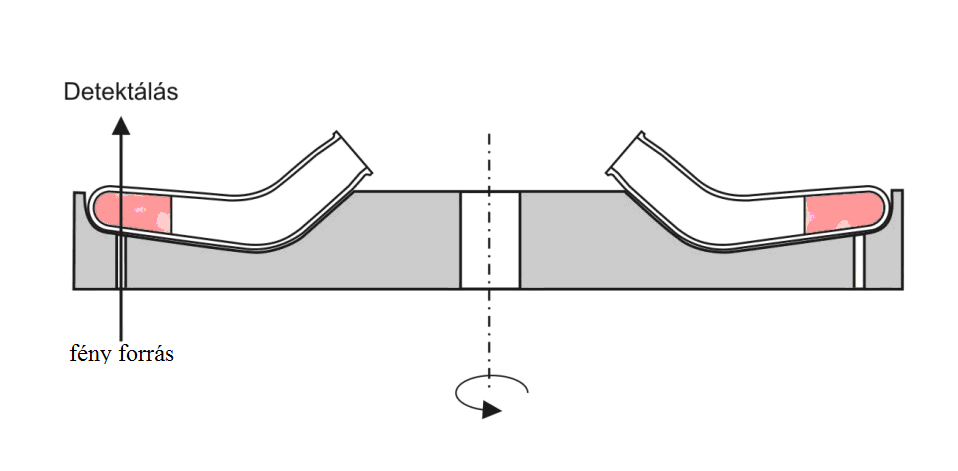
Multifunction centrifuge
The results coming from the sedimentation curves are completed with a camera to analyze the macroscopic inhomogenity (detect large clumps).
It is necessary because during the first few turns the large particles immediately reach the bottom of the cuvettes and they are not visible for the photometer which senses the sedimentation.
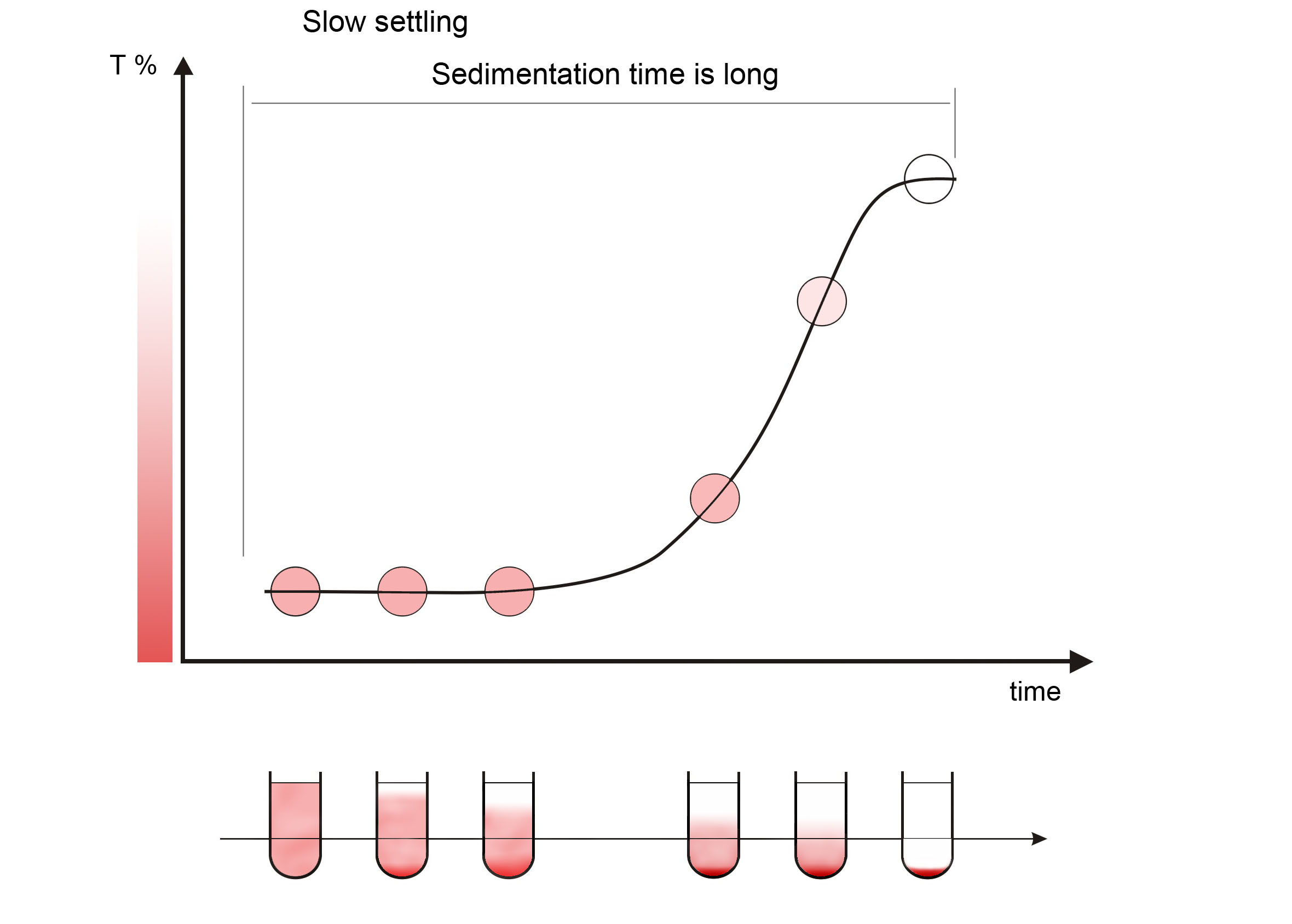
Single cell suspension
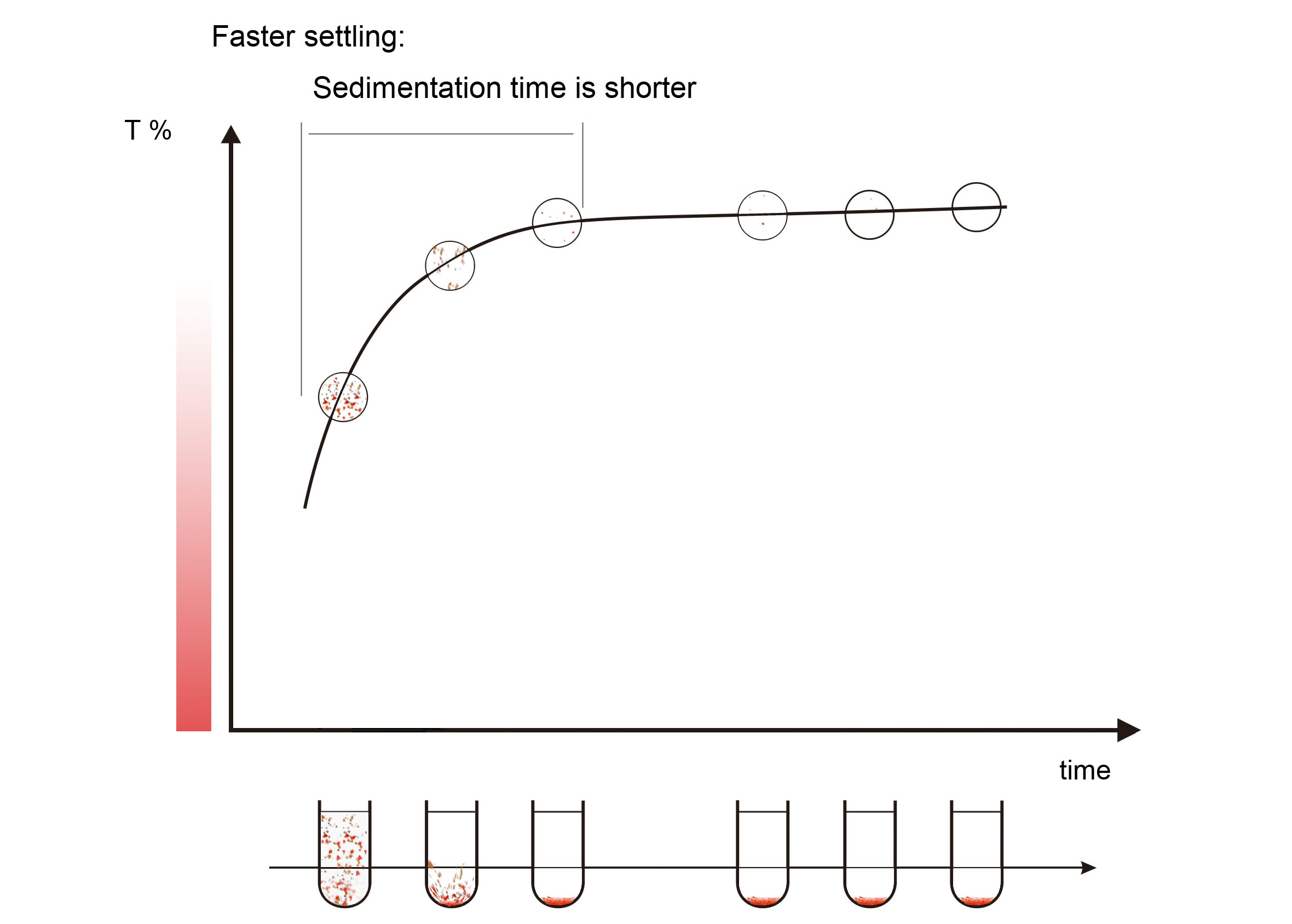
Suspended agglutinates
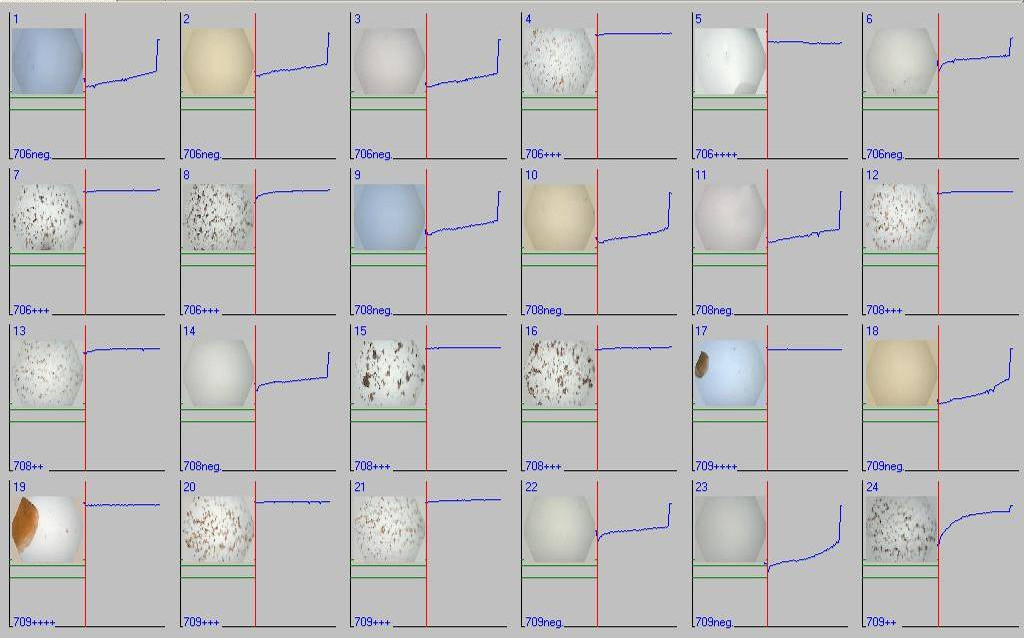
Curves and pictures